
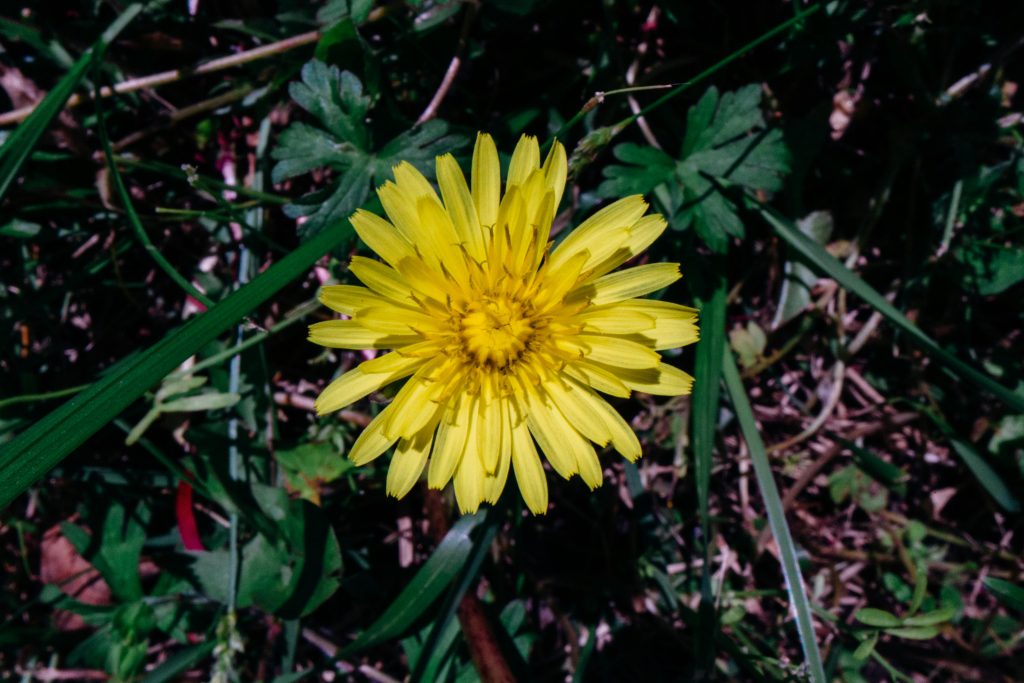
Spring is my favorite season. Nature awakens, all is alive and full of energy. Trees are blossoming, and it’s the perfect time to enjoy wild edible plants like dandelion, wild mustard, plantain, lamb's quarters, mallow, rocket, the tender elm leaves or the nopales pad of the prickly pads to name a few.
Today I want to talk about the dandelion (Taraxacum officinalis), because while this plant is one of the most abundant wild edibles and widely gathered among plant lovers, many people still disregard it as an annoying weed.
In a world where eating highly processed food is the norm and where diseases are rampant due to our nutrition and to the often unnatural and toxic environment, we expose ourselves. I feel it has become urgent to reconnect to the rhythm and wisdom of nature. Wild edibles offer the most potent nutrition, more than any plants cultivated in an organic garden. The roots of wild plants go deep in the soil to get their nutrients and water where our cultured plants don’t due to our care. I really believe in the saying “We are what we eat.” If we want the best for our bodies and minds, we should nourish ourselves with the least altered food.
Dandelion can be found everywhere, from forest, mountains, sea to meadows, from rich to poor soil. The flowers offer a golden carpet that bees love to pollinate. Everything in dandelion can be used for medicinal to culinary use. And this plant can be used all year round. The leaves in early spring are wonderful in salads but can be gathered in the wintertime as well, the flowers can be used in salads, desserts or jam and the roots in the fall are wonderful to heal and detoxifying the liver.
Dandelion is known for its diuretic properties. Natural intelligence makes this plant rich in minerals like iron and potassium, meaning that ingesting this plant ensures that our body doesn’t get deprived of minerals. It’s also rich in vitamins A, B, C and K. Dandelion is good for the kidney; it drains and detoxifies the body, and its bitter taste supports the liver. Studies show it protects the liver cells. It stimulates the appetite, activates the secretion and evacuation of bile. The antioxidant and inflammatory modulator properties of this plant are used in skincare cosmetics. In the past women used to make an infusion of the root to clean their face and eyes to ensure beautiful skin.
Leaves are best gathered before flowering, roots can be gathered in spring and fall, and stems during the blossoming and flowering You can put the entire plant in your salad. People suffering from chronic hepatitis and diabetes can see relief from their symptoms by ingesting up to 10 fresh stems and flowers for two weeks. Dandelion stems can also help with healing rashes and other skin issues. The depurative action eases rheumatic symptoms and spleen problems. Fresh or dried roots can be prepared as an infusion or decoction to help digestion. They are sudorific, hence inducing sweating, diuretic but also invigorating. For best results, put 1 teaspoon of dandelion root in ¼ liter of cold water and keep it all night. The next day, bring it to a boil, strain it and drink half an hour before and half an hour after breakfast in sips.
I have very fond memories of my grandmother and daughter making dandelion jelly from flower petals found in the French countryside. It makes a delicious jam that resembles honey in its color and taste. Seeing them gathering those sunshine flowers and cooking together was witnessing an ancestral bond of knowledge transmission.
Some towns all across the nation have a dandelion festival to celebrate this wonderful plant but also as a way to educate and communicate an important message about environmental stewardship. We are poisoning our ecosystem and ourselves with harmful pesticides and chemicals to get rid of what we consider weeds, which instead, could provide us with nutrition and medicinal value. I hope this article will make you want to add dandelion and other wild edibles to your diet.